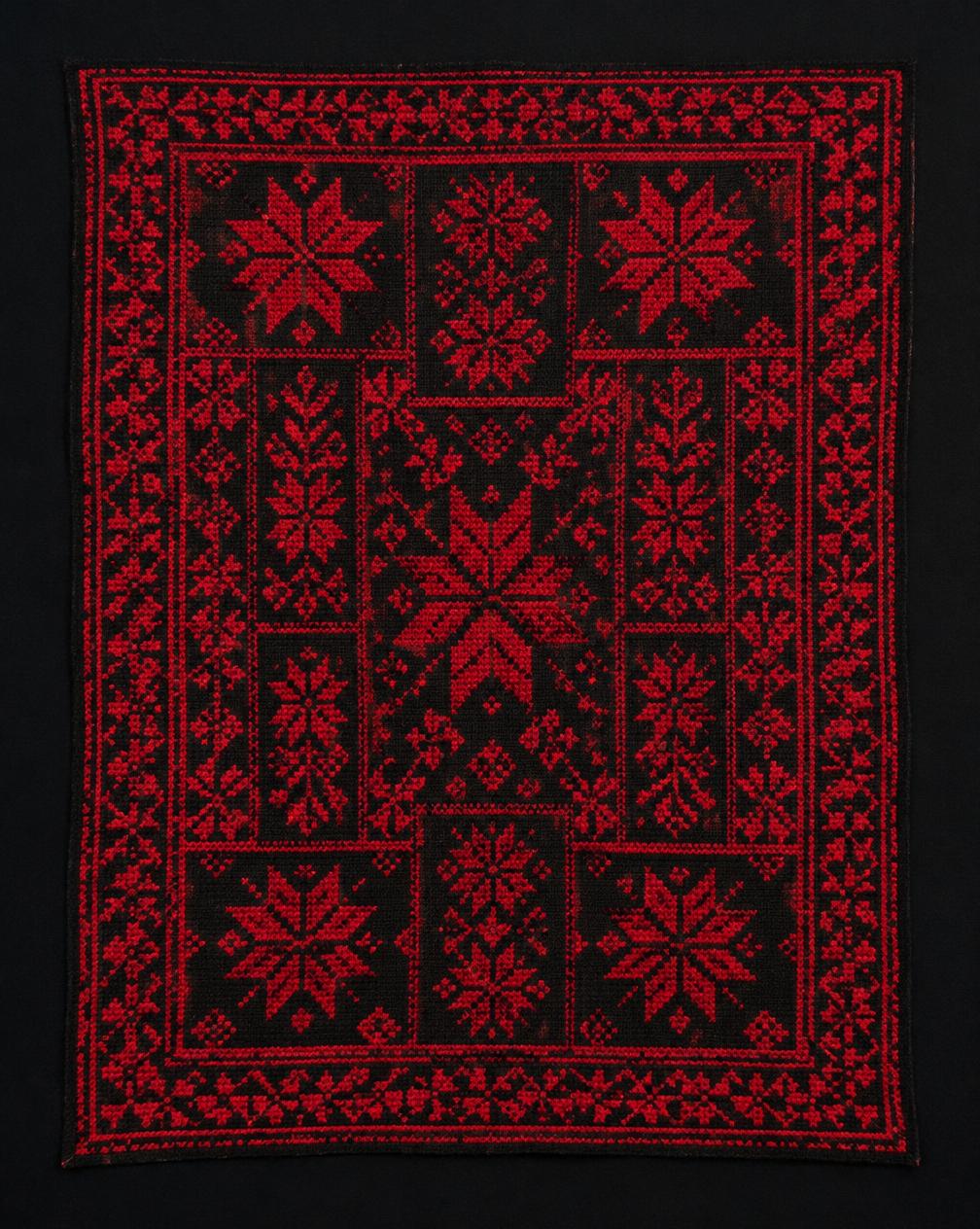
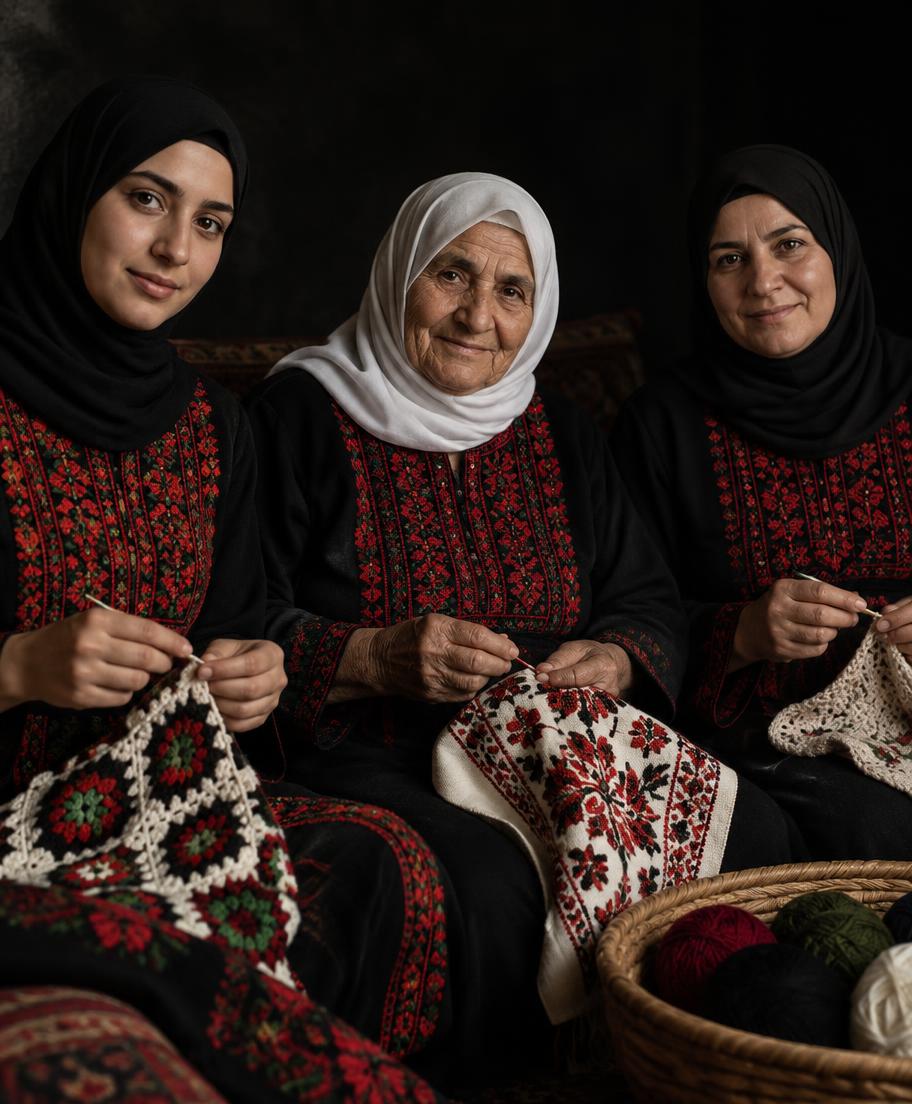
Palestinian tatreez embroidery
Tatreez is the traditional embroidery of Palestine: dense, colourful cross-stitch worked by hand, most famously on the chest panels and sleeves of the thobe, the long dress worn by Palestinian women. In 2021 UNESCO added the art of traditional embroidery in Palestine to its Representative List of the Intangible Cultural Heritage of Humanity — recognition that this is a living skill, carried between generations, not a museum piece.
How it is worked
Tatreez is built from one simple stitch repeated thousands of times: two diagonal threads crossing to form an X. Traditionally it is worked on even-weave cotton or linen, often in deep red silk thread, with accents of green, black, blue and yellow. Because the fabric is counted thread by thread, no drawing is needed — the pattern lives in the stitcher's head and hands, learned from mothers and grandmothers. A full thobe can take months of evening work.
What the motifs mean
The motifs come from the world around the stitcher: the cypress tree, birds, ears of wheat, water jugs, the moon, geometric borders of triangles and stars. Historically a woman's village could be read in her dress — Ramallah, Bethlehem, Hebron and Gaza each had their own patterns and colour habits, and the chest panel, the qabbah, carried the richest work. After 1948, when many could no longer reach their villages, embroidery also became a way to keep those places present.
Tatreez today
Today tatreez appears far beyond the thobe: on framed panels, bags, cushion covers, bookmarks and jewellery, and in the work of artists who weave its patterns into paintings and prints. For the women who stitch in and around Bethlehem, selling smaller pieces is often the most practical way to earn from the craft — a framed panel or a cushion can travel where a thobe cannot. When you inquire about a piece here, the money goes to the maker.